Posts

Showing posts with the label Mozambique

Mozambique: Filomena’s journey to overcome poverty

Image
Filomena Lamu standing in front of her old home in the Homoine district. CARE/Mauro Vombe   The devastating effects of the El Niño-induced drought in Mozambique have hit women and girls the hardest. As the worst drought in 35 years ravages, it has led to severe food shortages, forced changes in daily routines, and exacerbated existing vulnerabilities. Women, particularly those in rural areas, have borne the brunt of these challenges, with many struggling to provide for their families. In a small village in the Homoine district of Inhambane Province, 67-year-old Filomena Lamu faced the daunting task of caring for her two young grandchildren alone. Her daughter, who had left for the capital, Maputo, in search of work, had left the children in Filomena’s care.      Filomena’s days were long and exhausting, spent tending to her cassava crops and collecting firewood, which she sold in small bundles to make ends meet. “As a grandmother and primary caregiver, I struggled ...
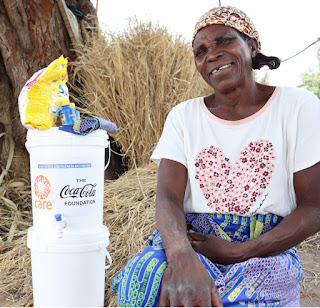
CARE Mozambique Provides Cyclone Freddy Survivors with Vital Hygiene Kits

Image
Natalina Jose  received a hygiene kit from CARE  Govuro District, Mozambique/CARE Mozambique Cyclone Freddy, the longest recorded cyclone in Mozambique's history, brought torrential rains that flooded large areas of Southern and Central Mozambique. Cyclone Freddy devastated the district of Govuro in the far north of the province of Inhambane. Natalina knew that the worst was yet to come for her and her motherless grandson.   Natalina, along with the majority of Mozambican families living in rural areas such as Govuro, relies on agriculture for her main means of subsistence and income. With the rains increasingly irregular and scarce due to climate change, Natalina had been exploring the lowlands as a way of ensuring minimum harvests to get by.  However, the floods caused by Cyclone Freddy ruined all prospects of a decent harvest for Natalina and many other small-scale producers across Inhambane. Heavy rains, which lasted several days, flooded their fields, destr...

[PRESS RELEASE] Ukraine Conflict Affects Emergency Response and Job Markets in Southern Africa

Image
  Zambia. CARE As the conflict in Ukraine continues, the shock waves are being felt all the way in Southern Africa which is still reeling from one of the worst cyclone seasons. From a shortage of relief supplies to hiked fuel costs, communities that were slowly recovering from the loss of livelihoods and floods now face another challenge as the cost of living increases. This has impacted response efforts and raises the worry of how the people will recover and resume normal living as things become more expensive. Hiked wheat and fuel costs are not only causing an increase in the cost of living but also putting the jobs of hundreds, in several sectors, at risk. In Zambia and Zimbabwe, where the economies were already fragile, fuel prices have increased by 13 percent and 7 percent respectively in Countries. On March 11th, Cyclone Gombe, a Category 3 storm struck Nampula province in Mozambique. So far, 61 fatalities have been recorded with over 450,000 people displaced. As humanitarian...

5 min inspiration :- Women finding ways through food crisis

Image
In Ghana, they call them “market queens”—women traders who have the connections and influence to organize women, adjust market prices, and influence trading patterns in their area. Faced with government shutdowns in local markets to stop the spread of COVID19, these women found ways to organize social distancing and  keep the markets open so people could eat. By the end of 2020, the World Food Programme predicts that  265 million people will be facing starvation  because of COVID19. CARE’s research shows a similar jump in hunger: in  Bangladesh , 70% of women are worried that they can’t buy nutritious and diverse diets for their children. In  Jordan’s Azraq camp , 50% of people are reporting food shortages—and 90% of women say food is their biggest need right now. For  women, the picture is worse —women already make up 60% of the world’s hungry people, and are the  first to lose their incomes and market access  in a crisis. But as always, wo...

5 Min Inspiration:- Women build solutions

Image
“Mata Masu Dubara [VSLA] members take their social responsibility very seriously towards their community. Let this crisis be a moment that can bind us in solidarity with each other.” –  Mariama Gambo, Niger “We have faced so many challenges that we have overcome. We’re convinced that our collective determination will beat COVID too.”   -Hawa Guindo, Mali Any time I start to feel overwhelmed by COVID 19 and all of its challenges, I take a minute to find out what women in VSLAs are doing to fight back. In true VSLA tradition, they are finding ways to take the smallest investments and use them to change the world. As they have done for  dozens of crises before COVID , women VSLA members are providing solutions that keep themselves, their families, and their communities safe. Supporting these women is an enormous privilege for CARE, and an activity that helps us reach more than 10.3 million VSLA members. VSLAs in  9 countries have already adapted  what they’re do...

5 min inspiration: Goats , sleep and stress-relief

Image
‘What makes me feel well in my heart? My goat. . . Every morning when I wake up the first thing that I see is my goat, tied up to the tree. Then I smile. … Someone could come and kill that goat. … But it would not matter. I could get another goat, because I bought the goat myself, with my savings. And now I have the power to solve my problems and take care of my daughter. I never have to be afraid again!’ Minani, Burundi COVID 19 is providing a brutal reminder that stress, anxiety, and psychosocial support are huge parts of the response to pandemics.  Coping with the physical disease isn’t enough . We need to support the whole human and help people manage feelings of isolation, loneliness, and anxiety. As Minani tells us, supporting the whole person may come in unexpected ways. Minani is a powerful reminder that if you can help people find stability and emotional support, they can change the world themselves. They can unlock solutions to solve not only their own problems b...

We lost everything. But the most painful part was losing my brothers. : Cyclone Idai

Image
I lost three of my brothers during the cyclone last year. It was a Thursday. I was living with them and my oldest brother on the outskirts of Beira, who supported me so that I was able to go to school. My teacher that morning said that a big storm was coming but we didn’t believe him at first because we saw no signs. But in the evening I woke up from the noise of the wind. It was so strong, it blew our roof away. I was very scared. A big tree in front of our house fell against our wall and my brothers rushed to the cabinets resting against that wall to take out bags and folders with important certificates and documents. That’s when the whole wall collapsed on them. One of the stones hit my head. I still remember seeing the cracks in the wall moments before my brothers were buried in  the rubble. One of my brothers was still breathing and we tried to save him. We called the police and they took him to the hospital. But just minutes later we received a call saying that he didn’t...
Image
Hope grown: seeds and some rain bring promise to Cupo, Mozambique Cupo –a small town, in the Southeast of Mozambique - no longer bears any resemblance to its long-established “fields of green” reputation. Crops have failed, and the residents do not have enough food to eat or sell. Finding water is a daily struggle because the village wells, even the deeper ones, have run dry.   People now have to endure a half-day’s walk just to find drinking water. After three years of drought, people in Cupo work twice as hard to eke out half a living. But, for the first time in many years, it rained, and every resident rejoiced. Especially because this coincided with distributions of drought-resistant seeds and tools by CARE, to help villagers cope with the extreme climatic changes. One such resident is 32-year-old Martha Chiruca: “This year I will produce my most plentiful crop after three years without great rain. We hope it continues raining as we now have seeds to cultivate. Wi...

Cyclone Idai: Bucket showers in Beira

Image
By Jennifer Bose, Emergency Communications Officer, CARE · There is a sea of mud and rubble for as far as the eyes can see. In one of the poorest neighborhoods in Beira, the second largest city in Mozambique, the devastation caused by Cyclone Idai is plain to see. It’s all around you. The blazing sun is searing to the skin. Yesterday, my personal nightmare was not having running water in the guesthouse, forcing me to shower with a bucket full of cold water. Looking at the children playing in dirty water around me, my “phobia” vanishes almost instantly. There’s rubble everywhere. Parts of metal roofs have sunk into the mud and large patty fields now have the same effects as quicksand, making them impossible to cross. In the middle of the narrow walkways, puddles remind me of the vast flooding people experienced here just a few days ago. "The water was up to my hips," Manuela tells me. She ran outside with her eight-month-old daughter, Mariam, when the cyclone ble...